Key takeaways
- Most cross-border delay is created days before the truck moves, in the documentation.
- A one-stop border post halves the number of stops, not the amount of paperwork.
- Transit cargo needs a customs bond; the bond, not the truck, is often what is waiting.
- Corridor choice should follow the cargo and the destination, not habit.
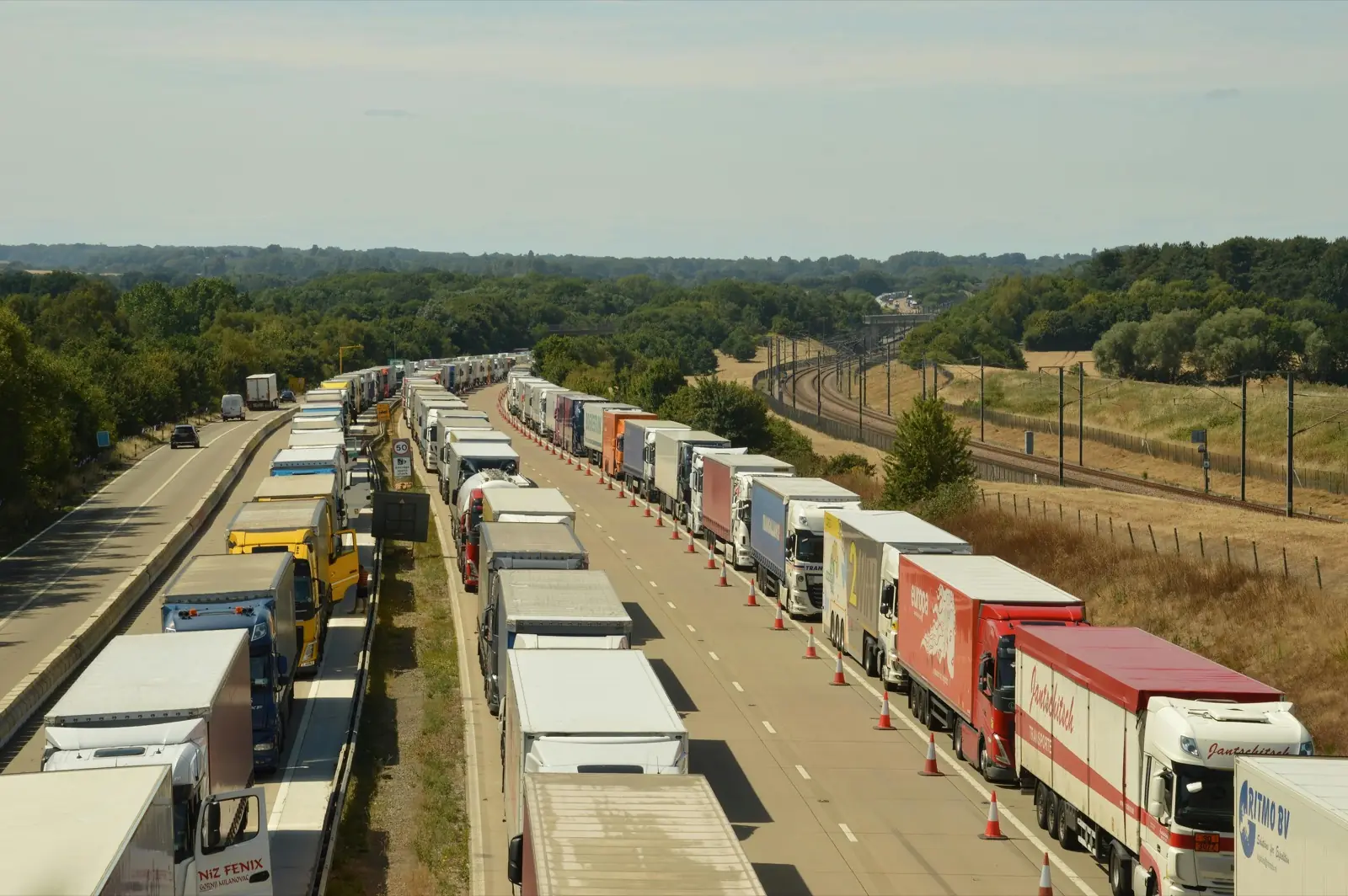
If you have ever watched a truck sit at Malaba for two days, you already know the uncomfortable truth about cross-border logistics in East Africa: the delay almost never starts at the border. It starts at a desk, days earlier, when a declaration is filed against the wrong tariff line or an invoice description does not match the packing list.
This guide walks through what actually happens when cargo crosses an East African border, where the time goes, and what a shipper can control.
The three kinds of cross-border cargo
Almost everything moving through the region falls into one of three categories, and they are treated very differently:
- Import cargo — entering a country for consumption there. Duties and taxes are assessed and paid at entry.
- Transit cargo — passing through one country on the way to another. No duty is paid in the transit country, but a customs bond guarantees that the cargo will actually leave.
- Export cargo — leaving the country of origin, usually needing a certificate of origin if the destination applies a preferential tariff.
Most cargo moving from Mombasa to Kampala or Kigali is transit cargo, which is why the bond matters so much. A truck can be fully loaded, fuelled and legal, and still be waiting on a bond it does not have.
What documentation actually travels with the load
The paperwork looks intimidating until you group it. In practice you are managing four things:
- Commercial documents — commercial invoice, packing list, and where relevant the bill of lading or airway bill. These must agree with each other. A description mismatch between the invoice and the declaration is one of the commonest causes of a query.
- Customs declarations — the entry or transit declaration filed in the origin, transit and destination countries as applicable, against the correct tariff classification.
- Guarantees — the regional customs bond for transit cargo, sized to the duty at risk.
- Preference and compliance certificates — EAC, COMESA or SADC certificates of origin, plus any standards, health or permit certificates the cargo requires.
Every one of these is preparable before loading. That is the entire argument for planning the crossing at quotation stage rather than at the border.
One-stop border posts: what they did and did not fix
Posts such as Malaba, Busia and Namanga now operate as one-stop border posts, meaning both countries' agencies work in a single facility and cargo is processed once rather than twice. This genuinely removed a stop.
What it did not remove is the requirement for correct documentation, the queue when several hundred trucks arrive in the same window, or the operating hours of the agencies involved. A truck arriving late on a Friday at a busy post is subject to the same physics as any other queue.
The practical implication for planning: arrival timing at a border is a decision, not an accident. Where the corridor allows it, we plan departures so trucks reach posts inside working patterns rather than at the tail of them.
The corridors, and how to choose between them
Northern Corridor
Mombasa → Nairobi → Nakuru → Malaba or Busia → Kampala, continuing to Kigali via Gatuna or Kagitumba. This is the busiest route in the region and the default for Ugandan and Rwandan cargo landing at Mombasa.
Central Corridor
Dar es Salaam → Arusha and inland, with Namanga, Holili and Isebania linking Kenyan and Tanzanian traffic. Often the better choice for Tanzanian destinations and sometimes for Rwandan cargo depending on where it lands.
Southern routes
Long-haul into Zambia and Botswana through Tunduma and Kazungula, typically for project cargo, bulk freight and regional distributors. These are planned runs — the economics do not work as opportunistic loads.
Where the recoverable time actually is
From our own operations, the delays that are worth attacking are, in order:
- Documentation errors made before departure. Fully preventable, and the single largest bucket.
- Bond and guarantee arrangements finalised late. Also preventable, and often the reason a "ready" truck is not moving.
- Arrival timing at posts. Partly controllable through departure planning.
- Physical inspection. Not controllable, but far less likely when documentation is consistent.
- Road and weather conditions. Not controllable; should be built into the estimate rather than pretended away.
Notice that the first two — the biggest — are administrative. That is why we treat cross-border work as a documentation discipline that happens to involve trucks.
Questions worth asking a cross-border provider
- Do you own the vehicle that will carry my cargo, or will it be subcontracted at some point on the route?
- Who prepares the transit declaration and arranges the bond — you, or a third party I will never speak to?
- Which posts do you cross weekly, and can you tell me their current working pattern?
- What happens if my truck is held? Who calls me, and when?
- Is the transit estimate you have quoted based on this route, or on a general table?
The answers tell you more than the rate does.

Written by the Jastan Logistics operations team. We move freight across Kenya, Uganda, Tanzania, Rwanda, Zambia and Botswana on our own fleet of 120+ vehicles. Everything here comes from work we do every week.